

Pauses aren’t good.
Nobody necessarily teaches presenters this, yet many behave as though it were true. A pause can feel like wasted time, hesitation, or forgetting what comes next. So presenters fill the silence with words, movement, fillers, the next slide, or the next point.
And sometimes, in trying not to lose time, they lose the audience instead.
We see this often in presentation practice. When one sentence runs into the next, one idea into another, and every part of the message is delivered with roughly the same rhythm, audiences can lose their place. They may still be looking at the speaker and listening, but now they are listening for something else: a familiar word, a phrase, a change in tone – any cue that might help them get back on track.
This is where contrast matters.
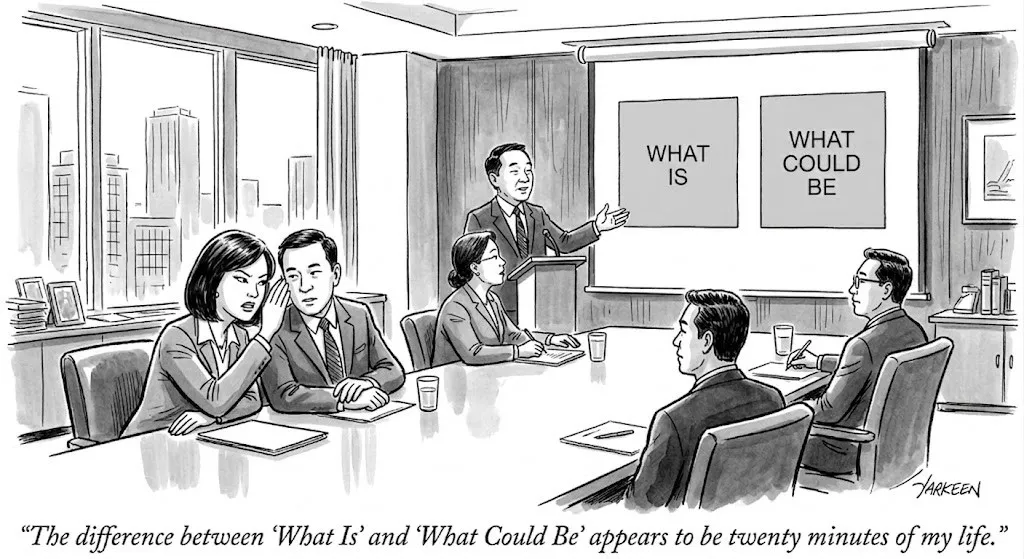
We often think of contrast in content: Problem ? Solution. Before ? After. What is ? What could be. But contrast also exists in delivery: sound against silence, movement against stillness, one thought against the next.
One of the simplest ways to create that contrast is a pause.
A pause may come before an important point, giving the audience a moment to anticipate what follows. It may also come after one important point, allowing the idea to settle. It may appear between sections, while the presenter shifts from one part of the audience to another, or even from one pair of eyes to the next.
There is no single correct place to pause. A better question is: What is happening to the meaning at this moment?
When the meaning changes, the delivery often should, too.
That is the difference between simply adding pauses and using them deliberately. Good presenters do not pause because someone told them pauses are engaging. They recognise where the message changes direction, weight or purpose, and allow their delivery to make that change perceptible.
That helps an audience stay oriented. And when people know where they are in your message, they are more likely to recognise what matters, understand why it matters, and decide what they want to do with it.
So, before your next presentation, resist the urge to fill every second.
Sometimes the silence is doing part of the communicating.
The pause is part of the message.