

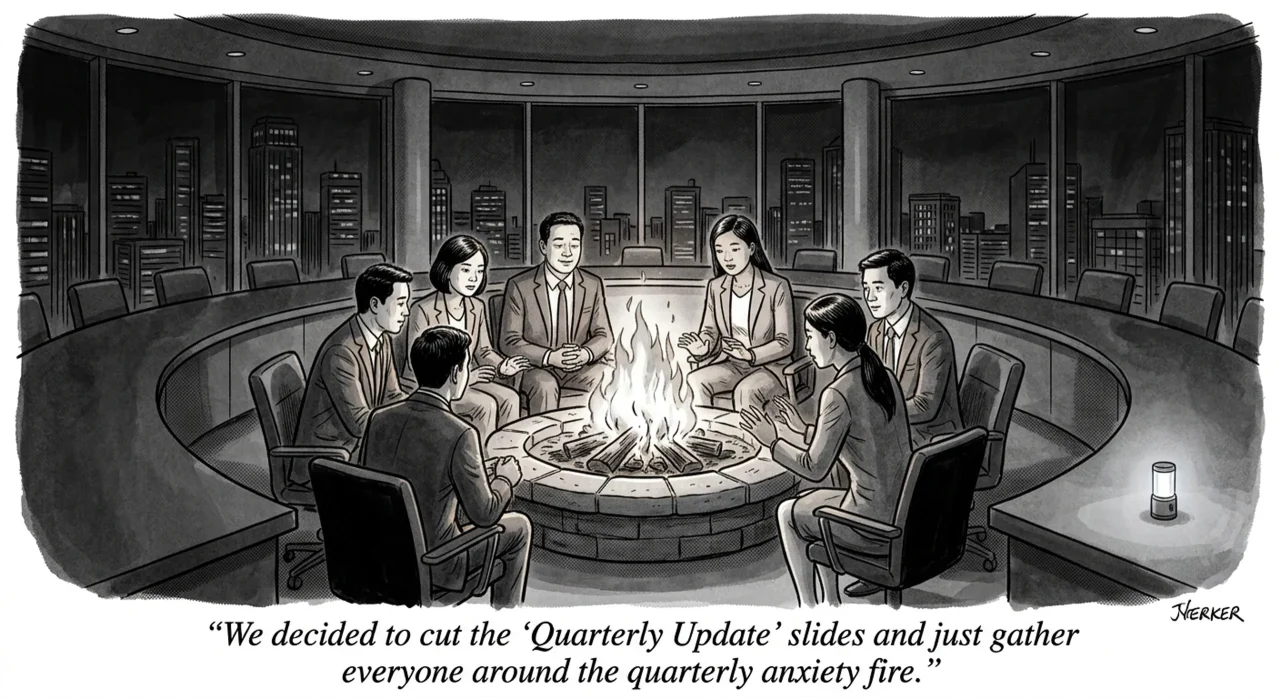
Storytelling began long before books, theatre or cinema. Its first home may have been a circle of people gathered around a fire. Beyond the flames was darkness, uncertainty and a world that still needed explaining. Around that fire, people told stories to warn of danger, preserve memory, make sense of what had happened and pass on what mattered.
In those ancient days, stories lived in the human voice, in gestures and on cave walls. They moved from one person to another, and from one generation to the next. But they were fragile. If nobody remembered them, they disappeared. If too much changed in the retelling, something important could be lost.
So storytelling adapted.
It moved into writing, onto the stage, through radio and television, and eventually into the many screens and platforms we use today. Each new form changed the way stories could travel. They could reach further, last longer and hold the attention of more people. But something stayed the same: stories continued to help us understand, remember, connect and care. Perhaps that is why storytelling has found such a natural place in business.
The setting is different now. Instead of a fire, it may be a meeting room. The audience may be busy, distracted and carrying a dozen other things in their heads. And yet the challenge is surprisingly familiar: how do you make people care enough to keep listening?
Facts and logic matter. So do data and evidence. But information on its own does not always create meaning.
A good business story can help an audience see what is changing, why it matters and what is at stake. It can give context to the numbers and shape to an idea. It can help people recognise something for themselves rather than simply being told what to think.
That does not mean turning every business message into a dramatic tale. It simply means remembering that people do not experience information as information alone. They bring memory, pressure, hope, ambition, fear and belief into the room with them.
Long after the meeting ends and the deck is closed, they may forget the exact wording. They may even forget some of the numbers. But they often remember what the message meant.
Perhaps storytelling’s journey has never really been about leaving the fire behind. It has simply been about finding new ways to gather people around one.

Regina Morris
Senior Business Presentations Specialist, Presentations Delivery