


“Connirae isn’t well…contact her.” The words are faint, yet urgent, coming to me as if in a dream. I wake after falling asleep on a flight from Kuala Lumpur to Colorado. I rub my eyes and dismiss the words. After all, I’m about to meet Steve and Connirae Andreas, who will be teaching at the 1997 Master Practitioner Certification. This thought hurries me back to my reading.
In 1987, after completing music studies in Melbourne, I returned home to Kuala Lumpur. The man who would later become my husband introduced me to NLP, and within weeks, I stepped into my first workshop in Neuro-Linguistic Programming. Nearly thirty-five now, I’m ten years deep in this new world: grappling with it, teaching it, living it. In that time, after joining my husband as he began leading a Learning & Development consultancy, music found a new form: from under my fingers at the piano, to shaping programmes for the corporate classroom; from helping children build skills over years, to helping adults transform in days. Hours from now, thousands of miles away, this plane will land, bringing me to the edge of what I know.
The long flight ends. Stepping out of the airport, the crisp, cold air rushes to greet me. My face and fingers prickle in reply, the only uncovered parts of me as I arrive in Denver, Colorado for the first time. When I reach the accommodation at Winter Park, I haul my suitcase to my room, wondering what I’d packed. It was merely two things: a small library of books I should have studied before facing the NLP masters, and enough warm clothes to resemble a walking Frosty.
The windows open to a wondrous sight, making me gape—the Rocky Mountains are towering nearby, staring back. I pinch myself and sing out loud the John Denver songs I know as I unpack and get organised: books, pencils, journal, coloured pens for notes and questions. All are now laid out nicely on my bed, waiting.
Morning arrives. Class starts tomorrow. A few of us gather, still strangers, already buzzing with talk of the trainers. We’re haggling for the volunteer’s highchair in our favourite expert’s session: both for the thrill to be near and not lose the chance to be changed forever. Someone “books” Steve Andreas and we all sigh. Imagine having him six inches away, his breath steady, his voice guiding you through The Forgiveness Pattern. A burden of a lifetime might lift.
“Connirae Andreas!” I jump in. “We’re going to be learning Core Transformation from her. I’m sorry…I must be the one to sit beside her.”
My course-mates stared at me, shocked: “You haven’t heard.”
“Heard what?”
“Connirae isn’t well. She’s been very ill for some time now. She won’t be teaching.”
The words from the plane surfaced. “You’re not going to believe what I’m about to tell you.”
As I spoke, everyone went quiet. Holding back tears, I continue, “We hadn’t heard the news that Connirae wasn’t teaching.” A decade of longing then spills out. “When I first read the books she co-authored with Steve, I wanted to write like her, contribute like her. My husband who studied here in 1990, hadn’t seen anyone in Malaysia teach like her: precise, elegant, no wasted words—perfect sense to a musician like me. Back home, classes were filled with banter, as if jokes were needed to keep things lively. After years of modelling her from afar, I wanted to learn from her in person.”
When the group dispersed, I sought out the lead coach and recounted what had happened. “How unusual,” she said. “Let me take it from here, while you focus on the course.”
A few days later, she approached me at the tail end of a learning activity: “Marianne, Connirae is on the line.”
My breath catches. Rising, I walk to the phone in the next room. I’m about to speak to Connirae Andreas, and I have nothing to say.
“Did you hear anything else on the plane?” she asks, her voice calm.
“There was nothing else, Connirae, I’m sorry.”
“Marianne, if you ever hear anything else, even if it feels or sounds bad, please find a way to let me know. I believe information can come to us in ways we might not understand.”
“I will,” I said quietly, knowing what she meant. “I believe that, too.”
Silence follows; the call lasts no more than two minutes. I walk back, head bowed, wishing something different had come to me. Unexpected “messages” have come before, but why this message? What was the point of the words on the plane arriving, vanishing and reappearing, only to be useless?
***
Twenty-eight years have passed. Finally, I will meet Connirae Andreas: not in Colorado, but in Wageningen, a name I had to google. She is scheduled to teach three levels of the Wholeness Work®. My first attempt in 2023 had been online; the sessions ran from midnight to three and my eyes refused to cooperate. When word came that she’d be teaching in Amsterdam in 2024, I registered, but subsequently withdrew, unable to get past several hurdles. This year, everything was paid for, and I almost did not go. Unknown to anyone, an unstoppable passage had begun.
During Lent, my 92-year-old mother undertook a two-week self-directed retreat at our apartment. She’d told us earlier: “I need time alone, to reflect, to make important decisions.” My husband and I, long-time retreatants, recognised the urgency. We had exchanged homes with her twice the previous year for the same purpose, and did so again, returning on Tuesday of Holy Week. She celebrated Easter at home with a lunch for boys from an orphanage she had long supported, and invited former students who had become friends.
At work, I was tying up loose ends before the trip. On Mercy Sunday, I heard my mother wasn’t well. When I stopped by, she was asleep; peaceful, nothing amiss. The next day on the phone, she was gasping for breath. My younger brother picked me up. We sped to her home, then to the hospital. It was a harrowing night at Emergency. Several of us huddled outside, discussing consequences of impending medical decisions. Over the next days, she stabilised slightly then began to deteriorate, and I could see the end approaching.
Wageningen loomed. My husband and I ran scenarios, discussed the significance of the trip, and concluded: if Mum remained critically ill, I would not go. But I wanted to go. She had often said: “Don’t eulogise after I’m dead. If there’s anything you want to do for me or say to me, do it now—while I am alive.” She and I lived by that. She had also made clear that she wanted her children with her during her last moments. Finally, the darting thoughts settled: nothing I learned would justify not being here if she died.
I emailed the organiser, explaining the situation. Could she ask Connirae if I could do the Level I exercises on my own and join Levels II and III? It was Friday evening. Connirae replied on Monday. She agreed, acknowledging the difficulty. Meanwhile, things had changed irrevocably.
That weekend, as I cared for my mother, we joined a video call with my brother and sister-in-law in Australia. Even though Mum’s speech carried a slur from a mild stroke, she was coherent, forceful: “I have to go home—to go Home! I can’t go Home from here!” After we hung up, she kept imploring, her voice breaking into tears: “MARIANNE! You brought Dad home that final day…we were all around him…why am I still here?” I had never seen or heard my mother cry out loud, no matter how great the burden or sorrow, until that chilling moment.
I told Connirae about Mum’s desperate plea and my uncertainty about attending. I ended with: “I trust that the answer that is right for me will come at the right time.” Connirae responded, “I’m sending love and good wishes for your Mum’s transition. To home and to Home, if that’s how it goes. I trust also that the answer that is right for you will come at the right time.”
With that, I put the workshop aside. My family turned to the urgent work to bring our mother home. As Monday slipped away, tension hung over us. We barely slept, fearing a fateful call. From the last days with my father, I knew that the regret of not acting sooner could last for years, or not lift at all.
At dawn on Tuesday, May 6, my younger sister who’d arrived from the U.S. stayed with Mum while I handled discharge requirements. My brother and sister-in-law from Australia landed, coming directly to the hospital. Others worked from Mum’s home, getting equipment, preparing her room. The ward staff suddenly announced they could not discharge her because of a computer glitch. She would have to stay another night. Horrified, my brother, a doctor, said: “If you don’t sort this out, we are taking her back now without the paperwork, and you can explain it to your superiors.” They resolved it shortly after.
Before we left, the Palliative Care physician met with us. As if standing on sacred ground, he gave us the final steps: how to check Mum’s breathing, how long to wait to know she had passed, to call calmly for someone to confirm. He ended, “Tell this to your family, as she won’t have very long.” My brother and sister accompanied Mum in the ambulance; I stayed back to settle loose ends.
“Mum’s home!” The WhatsApp message lit up with hearts, tears, and praying hands. When I arrived, some were settling her in her room at the back of her home. I remained in the front hall, shaking, as the worry of the past few days fell away. My husband asked softly, “How are you feeling?” My life with my mother rolled into a small, aching knot in my throat: “I think I have just done my last act for Mum.”
Over Tuesday and Wednesday, we took turns being with her while we made decisions. Mum had written detailed instructions, painstakingly revising them over the years in what we called her “Death Folder”. She recently named it Way Back Home, checking if I thought it was a good title. Those hours were hard. We had to weigh, assert, vote, acquiesce. Not every decision worked for everyone.
I returned to our apartment late on Wednesday, May 7. There was much to be processed, and I needed to rest. My six siblings and the rest of the family stayed. As I was posting some details, the message came—Mum had died.
Then came a flood of practical work, and at the wake, the emotional work of consoling people who wept, telling us she had been a mother to them. What began as our loss widened into communal grief. Saturday was the funeral. On Sunday, Mother’s Day, we interred her ashes. Two days later, while my family gathered for prayers, I was on the way to the airport.
After Mum died, I said to my husband, “I could probably manage on my own, but given everything that’s happened, I’ll need you.” He didn’t hesitate. Our assistant found him tickets on the same flight, a seat beside me, and we flew from Kuala Lumpur to Amsterdam, then travelled by train and taxi to Wageningen.
Months earlier, a good friend who lived in the Netherlands urged me to consider staying at the training venue. “You’ll be more comfortable, and the surroundings look gorgeous, too. This will help when you’re learning.” As my husband and I checked in, we chatted about the grounds. I’d seen that there were arboretums nearby, but not that the hotel was within one. Our room sat at the end of a long corridor; its windows formed an ‘L’ across the front and to the left, opening onto the trees of the Belmonte Arboretum. The Rhine glistened in the distance under the evening light. What remains, now that both my parents are gone?
After a short rest, I returned to Connirae’s Level I book that I’d paused when Mum fell ill. I couldn’t study on the plane: there’d been enough energy to talk about her, watch parts of movies, eat, and fall asleep. Now the material blurred as I hurried to finish, skimming through, scanning for patterns. Our SOP at work was simple: read at least one key text before a training.
“It’s too technical, like I’m reading algebra,” I blurted after a couple of hours. “I can’t relate to it.”
“But you always want ‘too technical’ when you’re learning something significant.”
He was right: piano lessons, music performance, NLP, Instructional Design, Vipassana, caregiving, writing. I always want to be in a field with a technical language, where precision is the norm, not something you sigh about.
I remembered Connirae’s workbook from the online class, filled with my notes, questions, and OMGs at passages that left us stunned. She had cracked a code to dissolve the ego, turning the centuries-old question Who am I? into Where is the I? We had discussed this swerve; how it could only have come from an NLP expert, and I thought—perhaps only Connirae. But here in Wageningen, I could not access any of that.
“It’s strange; the material seems different now. Rather than pulling me in, it’s a 10,000-piece jigsaw puzzle emptied from a box with no picture. When I was reading and using Core Transformation, it always resonated. Maybe I should have started there.”
My husband waited. “Well, I made it here,” I said finally. “Let me focus on the two reasons I came: to finally meet Connirae Andreas in person, and to learn her latest work directly from her.”
“That sounds good.”
The next day we walked into town, explored its streets, bought bread and cheese and arugula and sweet strawberries. On our way back, another arboretum caught our eye. We strolled through, found a bench beside a pond and made ourselves sandwiches, laughing about strawberries and my innocent question to the woman at the grocery store, “Are they sweet?”
She was not happy. “They’re always sweet.”
In my defence, they’re rarely, if ever, sweet in Malaysia. Mostly, they’re sour. Another lady offered me one. Hesitating, I braced, then bit into it. Stunned, I exclaimed: “Is this a strawberry?”
***
Connirae Andreas stands in front of the training room, speaking to someone. She’s taller than I imagined, slender, with graceful movements. Several others are waiting; everyone is bright-eyed. I am, too. The two highchairs, a flipchart, and seats in semicircles remind me of Colorado. Outside, people chat under the trees in the sunny morning. A sudden rush startles them. Was that a stork speeding by?
The queue hasn’t shortened. I linger, wondering where to sit. In Colorado, I chose the last row. I could step behind for a panoramic view of the trainers as they worked. Standing alone at the back, while everyone sat, no one existed except the expert and me.
Connirae catches my eye and we stride towards each other. We hug. “Your mother…from what you described, it seemed like she and you were prepared.”
“Yes, she truly was. We both were.”
“So much has just happened. I’m glad you’re here, Marianne.”
“I’m glad, too, Connirae.”
Ten minutes remain before the session begins and Connirae excuses herself. By now, the back seats are taken. I choose one in front, confident I can move behind for demonstrations. The young man beside me seems like the younger woman I was: intense, leaning forward on his chair, questions bouncing impatiently. We say a quick hello. As I print my name on the cover of the workbook and flip through, there’s only one question on my mind. How will everything unfold?
The room settles and the training begins. Wanting to listen fully, I skip my usual detailed notes, jotting only snippets of Connirae’s words and my reactions to them:
“Releasing of artificial effort.” This idea, this possibility, really appeals to me.
“I had to let go of everything I knew.” How does one do this?
“With each level, it becomes deeper, more complete.” This reminds me of building a musical technique.
“Find the ‘I’ in experience.” I don’t know what this means.
“Awareness as a capacity already present in body and space.” I can’t wrap my head around this.
At the end of the first day, I’m not buoyant. I feel like my notes: fragmented. As I enter our room, my husband looks up from his work.
“So! How was it? What was it like…meeting Connirae?”
Dropping my backpack onto the bed, I reply, “It was marvellous. So wonderful, to finally be in her presence. But the material…it was…I can’t believe I’m saying this…it was weird. Really weird.”
“What do you mean?”
I pause. “I’m not sure I can do five more days of this.”
“What?!”
“It’s the ‘I.’ It’s been reduced to three sub-modalities. Surely it’s not that simple. We’re at the start of the course, and someone said: ‘I’ve touched a part I’ve never touched before.’ Another: ‘I don’t think I’ve ever loved myself before.’ And me? I’ve been making things up in my head all day, as if I were playing in kindergarten.”
It would be much later before I understood how wrong I was about the ‘I’.
“But what about the new question about the ‘I’? And the passage on why change doesn’t last, how she’s solved it?”
“Something in me still knows it’s profound. But right now, all I can say is that it’s weird. The processes begin in a very detailed way, and end with a section on ‘Awareness’ which is highly generalised.” I went on, “She wouldn’t answer knowledge-based questions, always pointing us back to our experience, saying that the Wholeness Work isn’t to be understood mentally! How will I last?”
“She sounds like a Zen master!”
I laugh. “Exactly! She’s unperturbed, always repeating, ‘Knowledge is not the way. Go to your experience. Your experience is perfect all the time.’ What does that even mean—our experience is perfect all the time?”
We decide to look for the Rhine, the Nederrijn, actually. I’m exhausted, so my husband slows his pace when we head out. The old trees of the arboretum offer comfort.
Come to think of it, trees offer a simple way to understand sub-modalities if you’re new to the term. Here’s a glimpse. Look at a tree: you know instantly its location, distance, and size. Now close your eyes and picture it—where is the tree? Bring it near, push it far, make it large, make it small. You’ve just used visual sub-modalities, invisible tools that help us change from within.
***
We didn’t find the river. Without inspiration from it, I stayed calm through Day Two, focusing on guiding my partners with Connirae’s script. They are remarkable words. Saying them exactly, modelling my voice after hers, brought my partners to real shifts, without any further effort from me. When we swapped roles and they led me through the steps, I reported the first thing that came to mind, none of which felt significant.
Level I ends; we have a free day, and we set off again on our quest. To reach the main road, we face a long flight of steps. I hesitate. My knees are mending and the physiotherapist had warned against stairs. I start down, slowly; they hold up fine. At the bottom, this view greets us: vast open farmland, a handful of houses, cows and horses in the distance. Our eyes comb the horizon, but the Nederrijn is nowhere to be seen.
A few hundred metres on, my husband spots a locked wooden gate.
“Let’s climb over.”
“What? That’s trespassing!”
A man nearby is reading on a bench. When we ask if we can cross, he replies, “I do see people walking through.” That’s permission enough, and my husband is over in a flash. I’m contorting myself to get to the other side, while picturing a giant farmer with a shotgun, and a charging cow.
Of course he spots a faint path; evidence that others have traversed this person’s land. He gallops ahead and I quicken my pace to catch up, feeling like a character in books I read as a child: grass shimmering, a cloudless sky, animals far enough away. I imagine the farmer in his farmhouse, having tea, taking note of us. We come to a rise in the land and my husband wonders if the river lies beyond.
“It is!” My arms open to the sky. “We found the Rhine!” We breathe in the river’s scent, watch ducks glide past, dip our hands into the current, and talk of where it begins and ends. I wonder what it might be like to live here and write. When we turn back, my steps are light, almost skipping. If the farmer is waiting at the gate, he’s getting a hug.
That evening, I reflected on the first two days: Connirae’s book overflows with endorsements; learners around me are breaking through, but nothing is happening for me. After decades of NLP processes, there are more now, and this time, there’s “Awareness”. It seems to reach something deep-rooted—but I don’t know what or how. I can’t grasp it. There wasn’t enough time to access it. All I could reach was stillness, which comes easily—but…is that what Awareness is?
The “buts” in my notes call for attention: piece together the Wholeness Work; read about Awareness; test whether the finding of the ‘I’ is indeed too simple. Looking at the list, I realise I don’t yet trust that my experience is perfect all the time.
I’ve gotten permission to take the Level II and III workbooks ahead of class. Sitting by the window, my hands move across my journal; my eyes lift from the page to the trees, to the birds without names, then fall back again. I sketch my own map of the Basic Process, and a pattern emerges. When learning something significant, I draw, erase, redraw. I don’t hesitate to start again. The quest for the yet-unseen whole is what matters. I know that one day, the pieces will arrange themselves into something inescapable.
Though it’s nine at night, it’s light outside. I smile at the Nederrijn. To find it, I had to break a “rule.” If I were to break a learning rule now, it would be to let go of my trinity: grapple, understand, know. It’s one thing to let go for a picture of the whole. Letting go to become whole is simply not the same.
***
My notes were different in Level II: dense, packed with Connirae’s distinctions; the kind I’d need later to practise. Oddly, my journal contained no reflections. Did the river, the long walks, the worksheets pull me away?
With four days of learning complete, and a break before Level III, I needed inspiration. We took a train to Amsterdam, wandered through the city, bought cheese to bring home. I went into the Van Gogh museum alone, wanting to stand in front of his brushstrokes. My husband read at a café nearby.
The museum was crowded. I couldn’t linger at the paintings. But Van Gogh’s letters were there. I’d recently learned he’d written more than seven hundred to his brother, Theo. Studying his handwriting, I imagined the table where he wrote, and the places where I write. Surrounded by the fruits of his focus, it suddenly became urgent to adjust my life even more—to forego the great and small distractions, as E. B. White put it in Here is New York. I have to build my craft, write what I can in the time I have left. People sometimes call writing my “passion”, and I smile and nod. But writing is not a flaming desire. It’s simpler than that: I cannot live without doing it.
Shrouded in these thoughts as we walked back through the busy streets, I blurted: “I’m happy!”
“What’s making you happy? Oops, I mean—where is the ‘I’ that’s happy?”
“Right here.” I pointed to him. He grinned.
“What’s the size and shape?”
I swept my hand from his head to his toes. We laughed.
“Time to integrate into Awareness,” he said.
“Wait…you forgot sensation quality.”
“Oh yes. What’s the sensation quality?”
I pinched his ear. We laughed again.
“Now we shall invite the ‘I’ to integrate with Awareness,” I said, as if reciting our marriage vows.
Instinctively, our arms lifted; we circled them out and over our heads, ending with Namaste as we bowed to each other. Connirae had spoken about using the Wholeness Work in daily life. Whether or not we skipped a step or two, we integrated a happy ‘I’ into Awareness—and in that moment, I understood something important. We walked on as if it was an ordinary exchange.
Level III began the following day. I entered it stirred from the Amsterdam sojourn. During lunch, I returned to our room for a short nap and my husband surprised me.
“Paris is just a bus ride away.” He’d wanted to take me there for years.
“Oh!” I replied. “I’m on leave next week. I thought I’d be writing about Wageningen, but the way things are moving, I don’t think I will. Not yet anyway. Let’s go.”
In the final two days, I found myself summoning ‘I’s with confidence, relaxing into what might be Awareness, and no longer worrying about being at the beginning while others were ahead. Connirae did say her own changes were subtle at first.
When the training ended and most learners had gone, I approached Connirae. “How wonderful to have been in the same room with you, Connirae, to learn this work directly from you.”
“Marianne, when I saw you standing at the back, it seemed as if we already knew each other and the work, without words. I hope you continue with the Wholeness Work.”
I hugged her.
Walking out to dinner, I said to my husband, “Learning from Connirae was extraordinary: her exquisite frames, not one word that jarred in six days; her presence—a rare blend of gentleness, kindness and authority. I still feel strongly that the Wholeness Work is profound. But after six days, there seems to be no result, at least not anything I can recognise.”
We talked about detachment from the outcome: how it usually came easily to me, how process was always more important to me than the product.
“Paris will be good incubation time,” he concluded.
“You’re right. It will be good to let everything be.”
The next day, after checking out, we sat in the hotel restaurant waiting for my friend, the one who’d urged me to stay here. She’d been right: the beauty had mattered. My husband read; I wrote Morning Pages. “You’d like this story that Connirae shared,” I said. He looked up. “She mentioned a time when she taught the Wholeness Work to yoga practitioners with no NLP background. At the end, they told her that it was really weird. She was taken aback, then laughed and said, ‘You know, you’re right. It is really weird!’ Everyone in the class laughed, and I smiled, vindicated.”
We continued reading and writing. “Your equanimity steadied me,” I said after a while, knowing he’d shrug it off. “It was also more fun having you here.” He grinned. “And now, Paris.”
***
Back home, a thought surfaced: had I attempted too much in Wageningen? My course-mates were shocked I would go to such lengths, and I found it hard to explain my connection with Connirae. Though I hadn’t experienced breakthroughs, I knew I’d built some Wholeness Work muscles. This was my frame of mind as life in Kuala Lumpur resumed.
One of my post-learning tasks was to produce a 500-word piece for our company newsletter. I thought I’d be done in an hour. When I read it, I understood what Hemingway meant about first drafts. In my earnest second draft, I wrote my memoirs instead. After much excavating, I found the bones of this essay.
I scoured my Wageningen journal and notes in the course workbooks, looking for flesh. One morning, I saw Connirae’s words from the last day: “Feel for when the time is right to use it next. Start with the Meditation Format, or the Basic Process.” At the time I thought: I’ve finished 987 pages of The Brothers Karamazov. Was the next step really Kisah Sang Kancil? I skimmed through the Meditation Format but didn’t do the steps. Work left enough space to scribble a short list of issues I could use the Basic Process for.
Weeks later, stretched out on Sofasogood, my name for our only piece of furniture in the hall, and feeling ready, I returned to the Meditation Format. A couple of pages in, Connirae explained that it built on the material in Chapters 2 and 3, and that I should read those chapters first. From the training, I knew she always had a reason.
So, I reversed into Chapter 2, an exploratory exercise before the Basic Process in Chapter 3. I did most of the steps, underlined heavily, then paused for work. A couple of days later, I was wrestling with a long-held issue: my weight yo-yoing. Yet another plan was sketched in my Morning Pages. A sentence appeared that I could not have written before. The most important difference now is that I have the Wholeness Work.
In the next instant I was back on Sofasogood. Picking up from where I’d left off didn’t work. I returned to the beginning and read again while underlining, circling, and jotting questions in the margins. When it came time to do the process, I set the pencil down.
The first step was to locate a sensation in the body. Placing the book on my stomach, I closed my eyes. The fan hummed, a bird called; somewhere below, a motorcycle passed. Breath rose, breath fell, like the opening of Beethoven’s Moonlight Sonata.
Sensations surfaced: in my toes, along my neck, at my temples. I remembered Connirae saying to just choose one. I chose the sensation at my temples; its size and shape were clear. The script invited me to sense in and through the area, so I stayed inside the shape and explored, noticing what it felt like as I moved through it. In decades of internal work, I’d never sensed in and through a shape. I’d been wrong in Wageningen: I’d mistaken sensation quality for a sub-modality. This was distinctly different—it was like slipping into a brain cell and discovering, from the inside, what it was.
Then came the question: Where is the ‘I’?
I’d asked that question many times for my partners. Now I asked it for myself. Its strangeness was striking; a tiny injection of adrenaline before a hunt: Where is the I that is aware of this sensation? What is its size and shape?
But I didn’t go searching. Something emerged—as if it was there all along, waiting for the question.
The ‘I’ was small: about three centimetres wide, four tall and lodged behind my eyes. I found it. A tear came, bringing the Nederrijn back. I moved on to find the sensation quality of this ‘I’, probing it, wanting to know everything. At first it seemed thin and hard, and it wasn’t flat as I’d imagined. When I wondered about its temperature, I was surprised at the goosebumps that rose: it was cold. I kept sensing through every slice of its small frame. The ‘I’ appeared to be dense, yet it yielded to my touch.
Connirae always encouraged us to take as long as we needed. Today, I could do that. When I was ready, I picked up the book: the Awareness section was next. Tempted to figure it out, I remembered her saying, “Understanding isn’t the way…” When I had read the text and it came time to experience Awareness, I placed the book on the floor. Sensing in and through, feeling what Awareness was like from inside itself, drifting through Awareness as if the entire day was open, something shifted. There were no edges to my body. I was here and not separate from what surrounded me. It was borderless.
When readiness returned, my hand reached for the book. Read the next sentence slowly and softly, and whatever happens, happens. I remembered modelling her voice that first day. Saying the next words as she did, I invited the ‘I’ to open.
Something did happen. The thin, hard rectangle of the ‘I’ began to change. It expanded, as if inhaling, taking one long breath until it grew vast, almost too large for the space it occupied.
At the next words—relax in and as Awareness—its hard edges curved; they softened. As if exhaling, the ‘I’ dropped its shoulders, slumped, and lay down. It seemed weary, having stood upright all its life. Then it curled, held by Awareness already present in and through my body.
Resting there, without thought or word, it let go of itself. Fragment by small fragment, it dissolved. The ‘I’ was no more. In its place—an ocean-like depth of rest.
***
In Wageningen, I thought the six days would crescendo to the finding of the ‘I’. But the training did not culminate there—it began there. Though the room was alive with excitement about the Wholeness Work, there was little awe at being able to find the ‘I’. Some even changed Connirae’s script. Perhaps it appeared too simple, with every step arranged: A, then B, then C leads to ‘I’.
What Connirae said at the end stayed with me: “When you return, it may be difficult to describe what you’ve learned. Take the time you need, practise, and let the results speak.” Days passed before I talked to my husband about my encounter with the ‘I’. His face changed—it was the same look we’d shared months before Wageningen, when we read from Connirae’s book. Only this time we weren’t reading. Where the ‘I’ once lived in my mind is now space, and the restfulness from just one ‘I’ dissolving remains. A tiny wall I didn’t know existed gently came down. How many more rigid structures are there?
What has for so long in our history been intangible turns out to have a location. Connirae once spoke of the illness, now many years past—how an electric current seemed to surge up and down her spine until she was unable to do anything or go anywhere. She said, “I stood before the mirror one day, expecting to see sparks fly from the top of my head, and thought…surely I am dying.” From this, she turned the abstract Who am I? into the concrete Where is the I? With this singular new question, the ‘I’ can now be located and dissolved. It could make our present disarmingly kind. She has re-shaped a key for all of us.
Notes
Wholeness Work® and Core Transformation® are registered trademarks of Connirae Andreas and Andreas NLP.
The Forgiveness Pattern ©1990 Steve Andreas and Connirae Andreas.
This essay was written independently. The author is not affiliated with Connirae Andreas or Andreas NLP and received no compensation for its writing or publication.
For my mother, Celine Sara
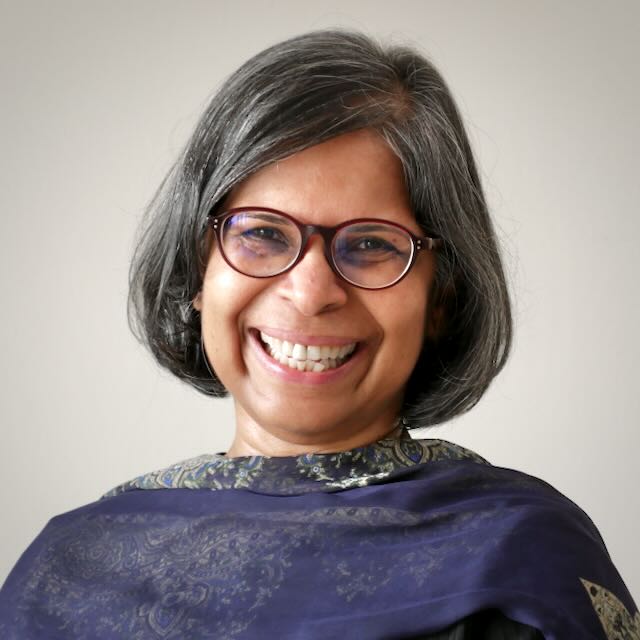
Marianne Vincent is Director of Training Quality at People Potential, where she shapes standards for training and leadership development. She writes on learning, craft, and the inner dimensions of professional life.