
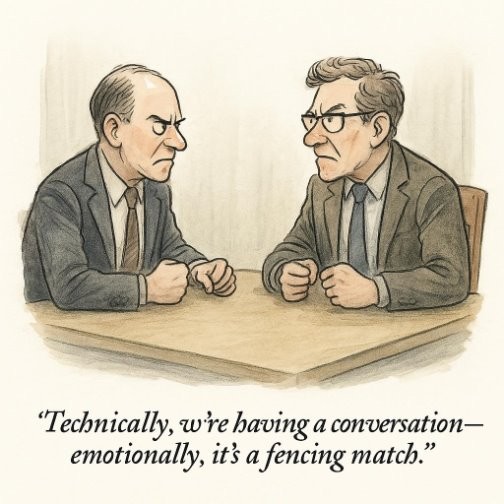
Conflict is an inevitable part of human interaction, but it does not have to be destructive. When handled effectively, disagreements can strengthen relationships and build trust. Constructive dialogue is the key to transforming tension into collaboration. This article explores the science behind effective communication and provides strategies to engage in meaningful, solution-driven conversations.
Understanding the Science of Constructive Dialogue
Picture the last time you had a conflict. It’s not uncommon for the fight-or-flight response to be triggered, causing people to become defensive or avoid confrontation altogether. Understanding why this happens may shed some light to how people behave during difficult conversations:
- The Neuroscience of Conflict
When faced with disagreement, the brain’s amygdala perceives a threat, often leading to emotional reactions rather than logical reasoning. Recognising this response can help individuals pause, regulate emotions, and approach conversations with composure. - Cognitive Biases at Play
Common cognitive biases, such as confirmation bias (favouring information that aligns with existing beliefs) and the fundamental attribution error (assuming negative intent in others’ actions), often escalate misunderstandings. Overcoming these biases requires conscious effort and a willingness to see alternative perspectives. - The Role of Emotional Intelligence
High emotional intelligence (EQ) is crucial for effective dialogue. It involves self-awareness, empathy, and the ability to regulate emotions. Leaders and team members who cultivate EQ foster environments where open and honest discussions thrive.
So where do we start in fostering constructive dialogue?
1. Active Listening & Presence
Effective communication starts with listening. Instead of preparing a rebuttal while the other person is speaking, focus on truly understanding their perspective. Techniques include:
- Maintaining eye contact and nodding to show engagement.
- Paraphrasing or summarising to confirm understanding.
- Reflecting emotions by acknowledging the other person’s feelings.
2. Managing Emotions in Difficult Conversations
Tense conversations can evoke strong emotions. Strategies for emotional regulation include:
- Practicing deep breathing to stay calm.
- Taking a pause before responding.
- Reframing negative thoughts to view conflict as an opportunity for growth.
“How an issue is framed impacts how it is perceived and responded to.”
3. The Power of Framing: How to Shape the Conversation
Framing is the art of positioning a conversation to encourage understanding and constructive outcomes. How an issue is framed impacts how it is perceived and responded to. To create a productive dialogue:
Reframe Negative Statements: Shift the focus from problems to solutions (e.g., “How can we improve this process?” instead of “This process always fails.”).
Use “I” Statements: Express concerns without blaming (e.g., “I feel concerned when deadlines are missed” instead of “You always miss deadlines”).
Ask Open-Ended Questions: Encourages discussion rather than defensiveness (e.g., “What challenges are you facing?” instead of “Why haven’t you completed this?”).
4. Building Bridges: Finding Common Ground
Even in disagreements, there are areas of alignment. Identify shared values or objectives to create a foundation for resolution. Techniques include:
- The “Yes, and…” Approach: This technique acknowledges differing views while adding constructive input. For example, if one colleague suggests a new process, instead of dismissing it, respond with, “Yes, and perhaps we can integrate this aspect to enhance efficiency.”
- Empathy-Driven Perspective-Taking: Understanding the other person’s perspective fosters empathy and helps shift the conversation from confrontation to problem-solving. If a teammate expresses frustration over workload, instead of responding with “That’s just how it is,” say, “I see that it’s overwhelming—let’s explore ways to redistribute tasks.”
- Seeking Mutual Benefits: Identify outcomes that serve both parties. For instance, if two departments have conflicting priorities, frame the discussion around shared goals, such as “How can we align our efforts to benefit both teams?”
- Acknowledging and Validating Concerns: Even when there is disagreement, recognising the legitimacy of someone’s concerns shows respect and encourages open communication. For example, “I understand that you’re worried about the deadline. Let’s see how we can address these challenges together.”
Dialogue Breakdown: How Conversations Can Go Wrong—And How to Fix Them
Scenario: A Manager and Employee Discuss Performance Issues
Ineffective Conversation:
Manager: “Your performance has been dropping, and I don’t see you putting in enough effort. You need to work harder.”
Employee: “I don’t agree. I’ve been handling multiple projects, and I think I’m doing fine.”
Manager: “That’s not how it looks from my perspective. If you don’t improve, we’ll have to reconsider your role here.”
Employee (perhaps not in front of the manager): “That’s unfair! I’m trying my best, but you don’t seem to care about what’s going on.”
What Went Wrong?
- The conversation quickly became defensive and confrontational.
- The manager used blame-focused language rather than addressing the issue collaboratively.
- The employee felt unheard and became defensive, escalating the conflict.
Constructive Dialogue Version:
Manager: “I’d like to talk about how we can work together to support your performance. I’ve noticed some challenges, and I want to understand your perspective.”
Employee: “I appreciate that. I have been juggling multiple projects and sometimes feel overwhelmed.”
Manager: “That makes sense. Let’s break down your workload and see if there are any adjustments we can make. What are some of the biggest challenges you’re facing?”
Employee: “I think clearer priorities would help. Sometimes I feel pulled in too many directions.”
Manager: “That’s good insight and self-awareness. Let’s align on key priorities and ensure you have the right support. Would that help you feel more confident moving forward?”
What Worked?
- The manager approached the conversation with curiosity rather than blame.
- The employee felt heard and engaged in problem-solving.
- The discussion led to a productive outcome rather than defensiveness.
“Inclusivity in communication means creating space for quieter voices to be heard.”
Cultivating a Culture of Trust Through Communication
Constructive dialogue should not be limited to conflict resolution but should be an integral part of team culture. Strategies for fostering trust include:
- Encouraging open-door policies and psychological safety in the workplace.
- Small action: Leaders can proactively check in with employees and ask, “Is there anything you’d like to share or any concerns you have?” rather than waiting for issues to arise.
- Change from status quo: Instead of assuming silence means no concerns, create anonymous feedback options or casual, open-ended discussions.
- Normalising feedback as a growth tool rather than a punitive measure.
- Small action: Replace “performance review” discussions with regular growth conversations that highlight strengths and areas of improvement.
- Change from status quo: Shift from annual feedback sessions to ongoing, informal feedback loops, ensuring employees feel heard and supported rather than judged.
- Celebrating diverse viewpoints and fostering inclusivity in discussions.
- Small action: Rotate meeting facilitators so different voices are heard and valued, rather than having the same individuals always leading.
- Change from status quo: Instead of defaulting to the loudest voices in meetings, create structured turn-taking to ensure quieter team members have opportunities to contribute.
By implementing these small but meaningful changes, organisations can gradually shift towards a culture of trust, where open and constructive communication becomes the norm rather than the exception.
Conclusion: From Tension to Trust
Mastering the art of constructive dialogue is essential for turning conflicts into opportunities for growth and collaboration. By implementing active listening, emotional regulation, and strategic framing, individuals can transform even the most challenging conversations into meaningful exchanges. When teams cultivate trust through open and effective communication, they lay the foundation for a more productive, innovative, and engaged workplace.

Lee Choong Yin
Practice Head – Leadership & Management Development